KULT Drive · Updated
How to check a car’s VIN and history in the UAE
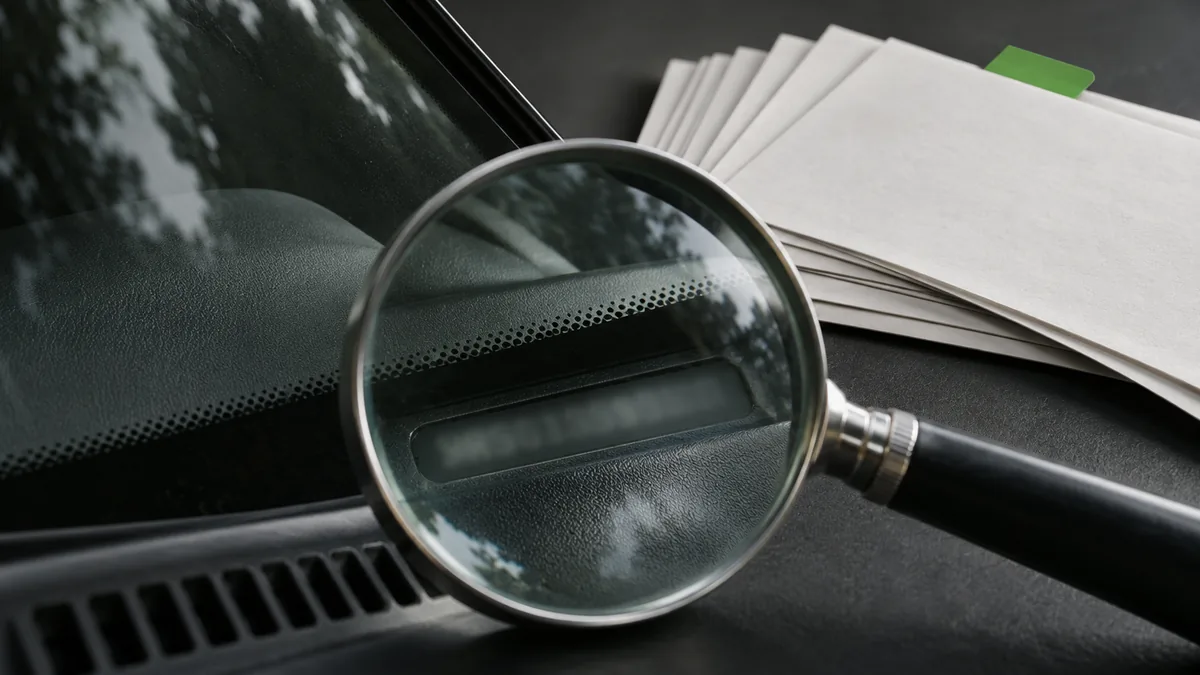
A VIN connects a car to its documents and available history, but no single report covers every country and repair. Use sources from the original market, local documents and an independent condition inspection.
Start by establishing the car’s identity
Match the VIN in the registration document to the accessible factory identification markings. Discrepancies, signs of tampering or refusal to show the number should put the purchase on hold until there is an official explanation. Do not publish someone else’s documents in full or share unnecessary personal data with random services.
Use the VIN to confirm the factory equipment and original market. A decoder may show some specifications, but it does not prove the absence of accidents or confirm the current mileage. Identifying the car and checking its past are separate tasks.
Choose a database for the relevant country
For a car registered in Dubai, request the available local documents and discuss an RTA report with the owner. For a US-origin car, title and title-brand history from NMVTIS through an approved provider can be useful. NMVTIS explicitly warns that it does not contain a complete repair history; an independent inspection remains necessary. NMVTIS explanation.
For a Korean car, CarHistory uses insurance payment records. Repairs not reported to an insurer may be absent from the report. No recorded payment therefore does not mean no damage occurred. CarHistory: data limitations.
For a Japanese car, export documents, verifiable mileage records and an authentic auction sheet matter. A screenshot without a lot number, date or way to verify its origin is weaker evidence than a document that can be matched to the car and an independent source.
Look at the sequence, not a single entry
Build a timeline showing the date, country, mileage, event and source. A change between miles and kilometres should be explainable. Falling readings, a sudden gap in the history or incompatible dates do not always mean fraud, but they require a documented explanation.
Compare service invoices with the recorded mileage, and photographs of previous damage with the body inspection findings. An insurance claim amount is not a precise measure of impact severity: labour and parts prices, and payment procedures, differ.
Check recalls separately
An accident-history report and a recall check are different sources. For the US market, NHTSA provides a VIN search for unrepaired recalls. The search does not show completed campaigns, some very recent recalls and certain other categories; it does not replace confirmation from the manufacturer. Applicability and the availability of repairs in the UAE need separate confirmation from the brand’s representative. NHTSA recall search.
Keep both the result and the date of the check. A new entry may appear later, and a previously open campaign may be closed after a repair. Before final payment, it makes sense to recheck the most important information.
How to make a decision
Identify confirmed facts, inconsistencies and gaps. A small gap may be acceptable with a good inspection and the right price; an unclear identity or concealed serious accident is a very different risk. A good report does not sell certainty: it helps you ask the seller and workshop the right questions.
Questions and answers
Does a clean VIN report mean there have been no accidents?
No. It means that the particular source shows no corresponding entry. Not every incident or repair is recorded in databases.
Can I check the history using only the number plate?
Some services support that search, but the VIN and verified registration details are more reliable for matching information across markets, documents and the car itself.
Next step
Discuss finding and inspecting a car that fits your budget and needs with KULT Strada.