KULT Drive · Updated
Oil, coolant and heat: preparing an engine for life in Dubai
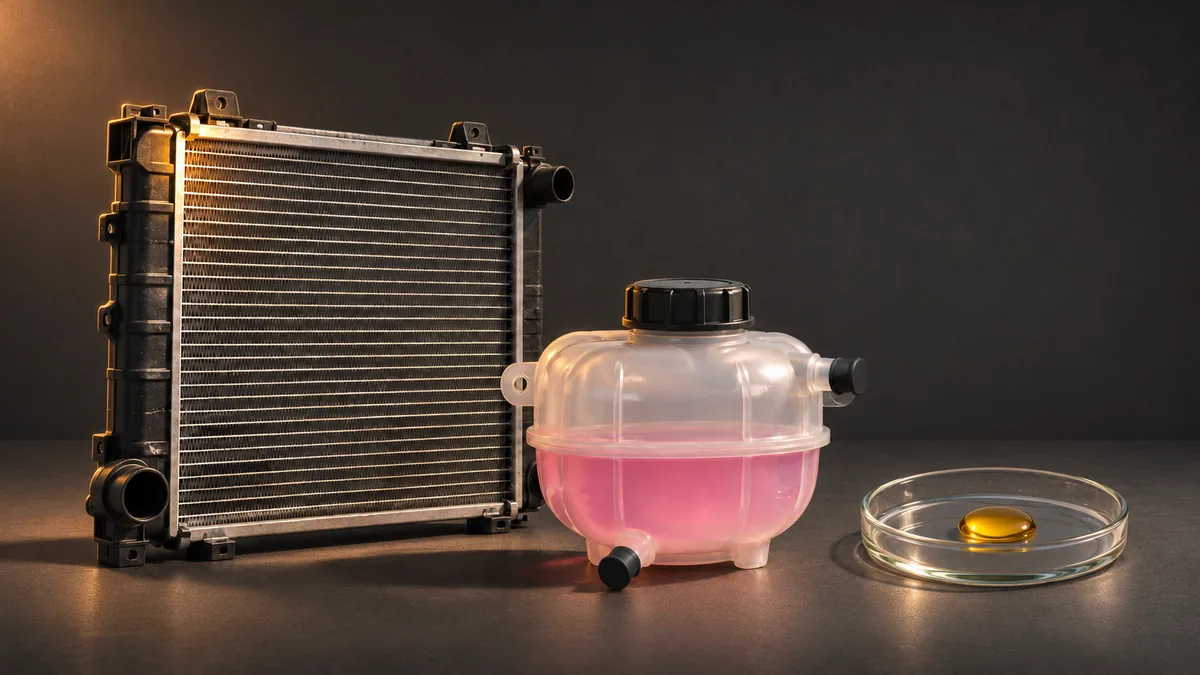
In a hot climate, oil that meets factory specifications and a working cooling system matter. Higher viscosity, a random coolant or routinely topping up with water is not a universal solution for every car.
Choose oil by specification, not a weather myth
The manual sets out oil requirements for the specific engine. Viscosity is only part of the specification: approvals and compatibility with the engine design and exhaust-treatment system also matter. Toyota UAE’s official guidance recommends following the car’s requirements rather than a seller’s general advice. Choosing engine oil.
Do not transfer a recommendation for an old naturally aspirated engine to a modern turbocharged engine or hybrid. If a workshop proposes departing from the specification, ask for documented technical grounds rather than “everyone here does it”.
Monitor consumption, not just the change interval
Check the level using the manufacturer’s procedure: some cars have a dipstick, while others use electronic measurement with requirements for temperature and vehicle position. An incorrect check can lead to unnecessary topping up.
Changes in oil consumption, smell, smoke or new leaks call for diagnosis. Topping up maintains the level, but does not explain the cause. Keep mileage and oil-quantity records so a specialist can assess the trend.
Coolant is more than its colour
Different formulations may have similar colours. Determine compatibility by specification, not appearance. Do not mix unknown fluids or routinely replace the specified formulation with plain water.
The entire system needs to be leak-free and functional. Radiators, fans, hoses, the cap and temperature control should be considered together. A preventive inspection before heavy use is more helpful than replacing individual parts at random.
What to do if the engine overheats
A temperature warning is not a normal feature of a Dubai summer. Stop safely and follow the car’s instructions. Do not open a hot system: pressurised fluid can cause serious burns. This warning appears explicitly, for example, in the Ford owner’s manual; use your own model’s manual for the correct procedure. If you doubt the car’s condition, arrange professional help instead of continuing to a convenient workshop.
Do not try to mask the problem by continually switching off the air conditioning or clearing the fault code. These actions are not repairs and may delay diagnosis of the cause.
What to request at a service
Ask the workshop to document the specifications of the materials used, any leaks found and the basis for recommended work. Agree separately on cleaning heat exchangers: the method must suit their design and avoid damage.
The main principle is simple: heat makes good condition more important, but does not override a car’s engineering requirements. A good workshop explains its decisions through the specific model and measurements, rather than one recipe for the entire city.
Questions and answers
Must I use thicker oil in hot weather?
No. Use the manufacturer’s specified approvals and viscosity range for the particular engine.
Can I top up with any coolant of the same colour?
Colour does not establish compatibility. You need to know the fluid specification and the car’s requirements.
Next step
Discuss support with servicing, paperwork and everyday car use with KULT Corsa.