KULT Drive · Updated
Fleet management in the UAE: measure cost per kilometre, not just servicing
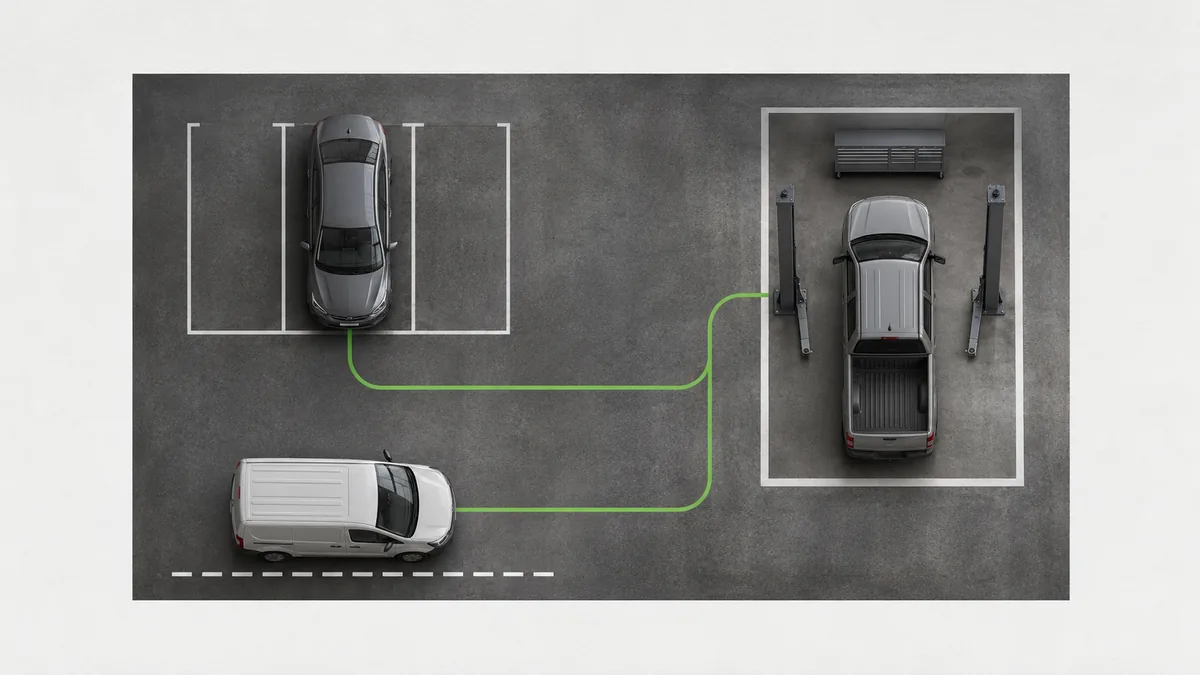
Fleet economics depend on utilisation, depreciation, fuel, paperwork and downtime as well as workshop invoices. Start with one reliable vehicle register and comparable measures for each type of work.
Create one reliable register
For each car, record its identifier, VIN, plate, purpose, responsible person, mileage, registration, insurance and maintenance plan. Separately record whether it is owned, rented, leased or managed under contract. Do not mix the owner’s costs with the operator’s.
Document dates should trigger tasks, not merely sit in a spreadsheet. RTA has separate company-vehicle registration procedures; responsibilities and authority should be organised at legal-entity level. Company Vehicle Registration.
Choose a useful unit of work
For delivery, cost per kilometre alongside completed orders is useful. For company transport, days available and monthly cost may matter more. For specialist equipment, working hours may be more useful. One measure cannot describe every type of use.
Include depreciation or contractual charges, financing without double counting, fuel, servicing, tyres, insurance, paperwork, tolls and parking. Check variable charges through the relevant systems rather than an outdated single benchmark. Salik, DARB.
Separate downtime by cause
Record waiting for approval, diagnosis, waiting for a part, repairs, quality control and readiness for collection. A generic “at the workshop” entry does not explain where time is lost. Calculate the measure consistently across the fleet and keep scheduled servicing separate from emergency repairs.
Downtime cost is not necessarily the whole day’s revenue. Account for work actually lost, an available replacement and additional expenses. Otherwise, the report will overstate the effect of any improvement.
Preventive work should be measurable
Compare planned and actual maintenance, repeat workshop visits, unplanned failures and tyre use. A recommendation to replace a vehicle should consider its history and future role, not just its age.
Telematics helps identify unusual consumption or risky episodes, but its data needs checking and drivers’ personal information needs appropriate handling. Do not treat an automated event as a proven violation without context.
How to assess an external fleet manager
In an EGO or other operator’s contract, define the scope of oversight, data access, spending-approval authority and reporting format. A fixed fee per car does not mean all repairs, fines and insurance premiums are included.
Start with a baseline: what the fleet cost and how it operated before changes. Only then compare the result. A savings percentage without underlying data is an advertising promise, not a management measure.
Good management makes the causes of costs visible and helps choose the next actions: repair, replacement, route changes or improvements to the approval process.
Questions and answers
What is the main fleet measure?
It depends on the task. Cost per kilometre, availability and downtime are useful together; a single universal measure may hide important operating differences.
Can savings be guaranteed before an audit?
Without baseline data, a specific percentage cannot be credibly promised. First establish costs, condition and processes, then measure changes.
Next step
Discuss an audit of your fleet’s expenses, operational readiness and processes with KULT EGO.
Sources
- RTA Dubai — Company Vehicle Registration. Updated: 2026-10-06.
- Government of Dubai — Road toll in Dubai (Salik). Updated: 2026-04-03.
- Q Mobility — Darb FAQ.