KULT Drive · Updated
Lexus LS 400: how a new brand challenged European luxury
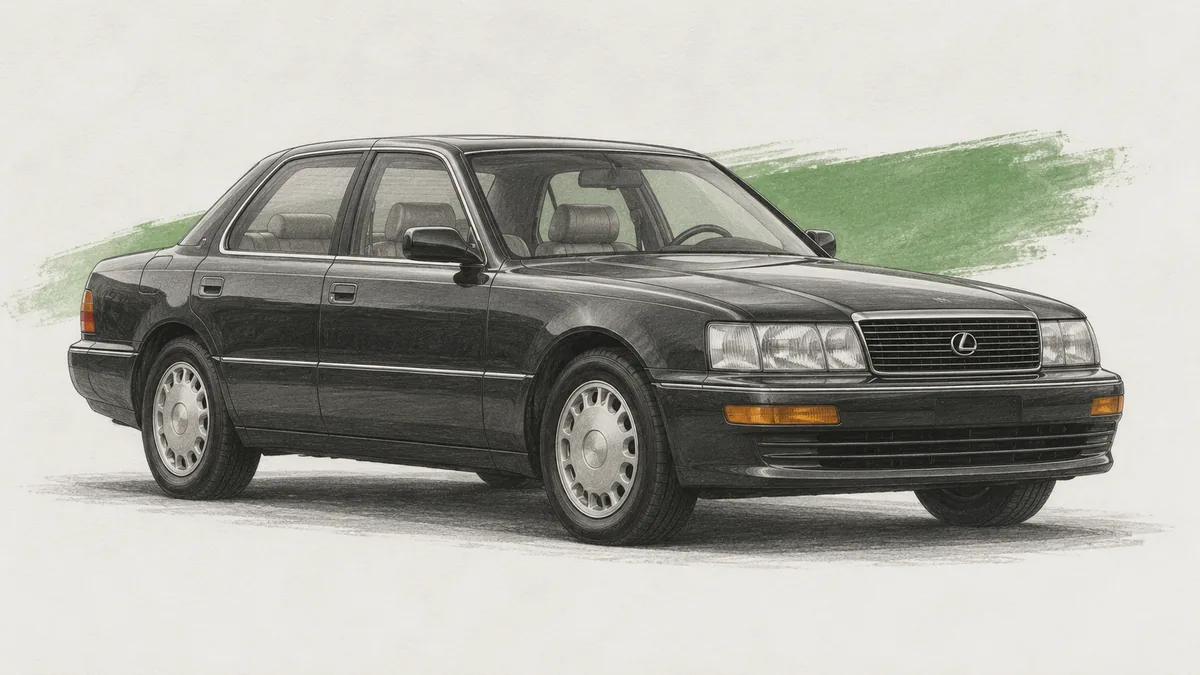
The Lexus LS 400 was the key car in Lexus’s 1989 launch. Toyota was creating not just a new large saloon, but a distinct offering for premium-car buyers, including sales organisation and quality control.
A new car needed a new explanation
Entering the expensive end of the market takes more than extra power and leather. Buyers assess the whole experience: cabin design, quietness, the dealer and servicing. The LS 400 story is interesting because product and brand were created as interconnected elements.
Toyota’s original announcement of 15 May 1989 marks the start of LS 400 production at the Tahara plant. It explicitly states the intention to compete with European premium brands. This is not a later interpretation of its success, but a document from the launch period.
What the first LS offered
For the US market, Toyota specified a four-litre V8 producing 250 hp. Lexus sales in the United States were scheduled to begin in September 1989. A dealer network was being launched at the same time to support the new brand.
A Lexus retrospective places the LS 400’s public premiere in Detroit in January 1989. Presentation, production start and arrival with customers therefore happened at different times: a useful distinction in any automotive chronology.
Why quality control became part of the story
The original release describes tests of completed cars and repeat inspections before delivery to US dealers. This shows that the impression made by a premium car begins somewhere beyond the design studio, too.
Our editorial conclusion: a technical specification alone does not establish trust in a new name. What matters is how consistently the company reproduces its promised result, from one car to the next and from sale to servicing.
What the history does not prove
The first LS’s reputation cannot replace inspection of a car that is several decades old. Even a successful design needs working systems, appropriate consumables and attention to age-related changes.
Nor should US specifications automatically be applied to the Japanese Celsior or every later Lexus LS. A relationship between models does not make their documents, equipment or market conditions identical.
Why the LS 400 remains interesting
This is a story about a newcomer defining its own standard in a long-established segment. There is no need simply to copy a competitor’s outward features: it is possible to reconsider which inconveniences buyers regard as inevitable.
For video, the strongest approach combines the original press release, factory quality control and cabin details. That turns the story from a list of adjectives about “everlasting reliability” into an explanation of a particular approach to building a premium car.
Questions and answers
When did LS 400 production begin?
Toyota announced the start of production at the Tahara plant on 15 May 1989.
Does the LS 400’s reputation remove the need to inspect a used example?
No. Age, maintenance, bodywork and technical condition must be assessed separately.
Sources
- Toyota — Lexus production begins. Published: 1989-05-15.
- Lexus USA — From Origin to Eminence: A Lexus Retrospective.